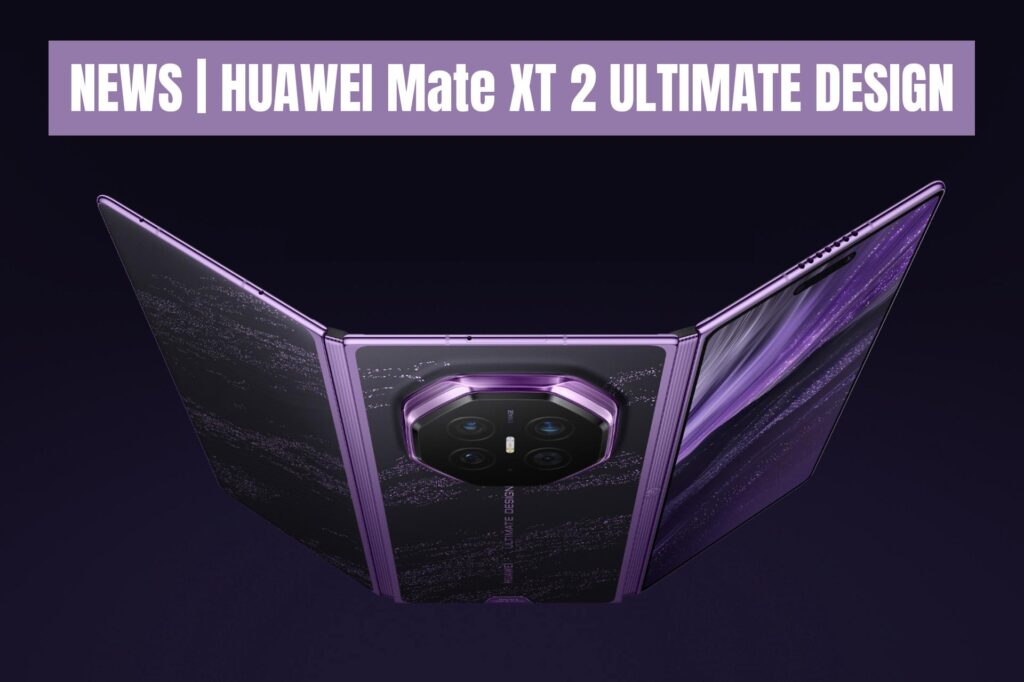
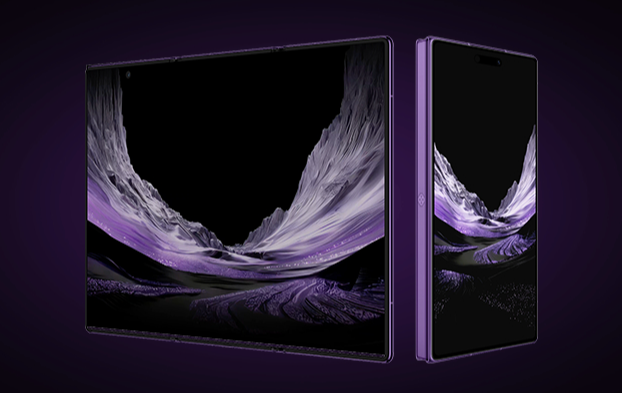
The Huawei Mate XT 2 Ultimate Design has been officially unveiled, adopting an all-new wing-expanding tri-fold form factor with comprehensive upgrades across display, chipset, imaging, and software.
Display and Durability: The foldable inner screen measures 10.2 inches, supporting 3K ultra-clear resolution with a 12.8:9 aspect ratio, while the 6.5-inch cover screen features a 2442×1140 resolution and a peak brightness of 6,500 nits. Built on the ultra-reliable Xuanwu tri-fold architecture with redesigned hinges and screen craftsmanship, it is the first tri-fold phone to achieve IP58/59 dust and water resistance. The Xuanwu Kunlun Glass cover screen offers 30× better drop resistance and 16× better scratch resistance, while the inner screen uses an ultra-tough multi-layer composite laminate that boosts impact resistance by 200%. The device comes in three colors — Black, White, and Brocade Purple — with a star-diamond camera module design, traditional gold-woven Yunjin brocade craftsmanship on the body, and an “Ultimate” emblem on the hinge.
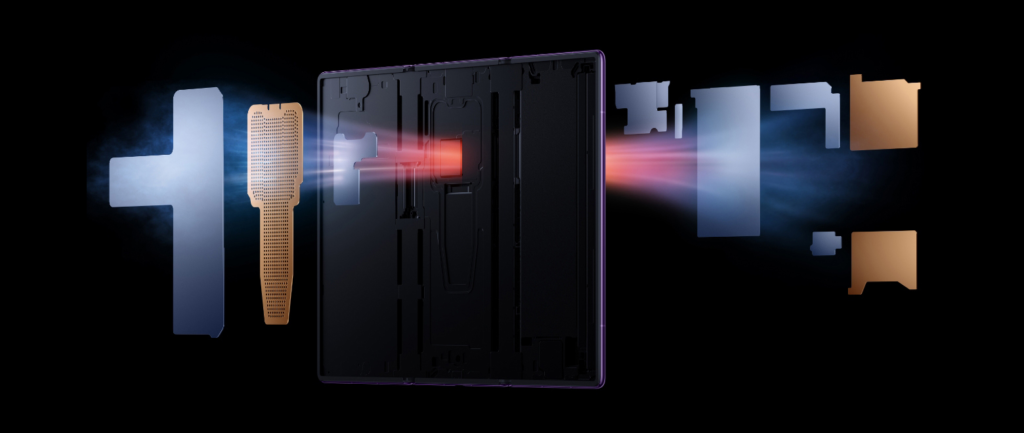
Performance: The phone debuts the Kirin 9050 Pro, Huawei’s most powerful smartphone chip to date, delivering 42% higher overall performance than the Mate XTs. The Lingxi CPU offers 24% higher single-core peak performance and 52% higher multi-core concurrency, with 50% faster large-file loading. It packs the Maliang GPU supporting real-time ray tracing of 50 million rays, boosting rendering performance by 142%. The Da Vinci architecture NPU runs the industry’s first on-device MoE omni-modal large model with 30B total parameters (2B activated). The Balong modem supports integrated space-ground communication, improving satellite paging success by 42% and satellite acquisition speed by 40%, with terrestrial networks supporting 5A speeds. The chip features a multi-channel thermal packaging combined with an oversized VC graphene cross-axis cooling system, reducing gaming heat by 2.5°C, along with dual chip-level security and the industry’s first post-quantum cryptographic algorithm detection.
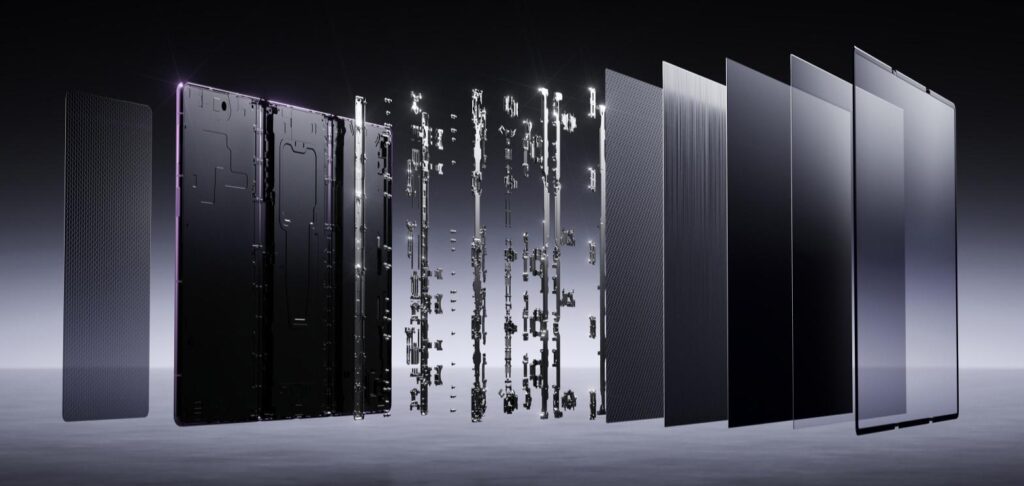
Privacy and Experience: The phone debuts hardware-level privacy protection for foldables. The Lingdun privacy screen uses an independent dual-pixel design — the display looks black from the side while remaining clear from the front — and can be quickly activated by double-tapping the cover screen or via the smart control key. It supports two-screen or single-screen use; a live demo showed the left and right screens propped upright for physical shielding. It is also the industry’s first to offer ECG heart-rate analysis, certified as a Class II medical device by the drug administration. Running the debut HarmonyOS 7, specially optimized for tri-fold, it supports split-view reading, column-based multitasking, three apps on one screen, and a dedicated PC app zone — further boosted by the tri-fold stand and M-Pen 3 Mini stylus for enhanced productivity and creativity.
Imaging: The rear quad-camera system includes a 1/1.28-inch LOFIC 50MP RYYB ultra-high-dynamic main sensor with an F1.49–F4.0 continuous variable aperture supporting 18EV dynamic range; a 50MP RYYB large-aperture periscope telephoto with 3.5x optical zoom, OIS, and telephoto macro; a 40MP RYYB ultra-wide camera; and the debut third-generation Red Maple primary color camera with 95% improved color fidelity. On the software side, it supports real-time smart capture preview, AI pose recommendations, and calendar-mode shooting.
……………………………………………………Electrostatic Protection Knowledge……………………………………………………
ESD (Electrostatic Discharge) components are specialized electronic components designed to safeguard electronic devices from the damaging effects of electrostatic discharge. ESD is a sudden release of static electricity that can compromise the functionality or lifespan of sensitive electronic components. ESD components mitigate this risk by diverting, absorbing, or dissipating ESD events.
In mobile phones, ESD components are critical for protecting internal circuitry from ESD-induced damage. Due to the sensitivity of many components within a mobile phone, multiple ESD components are strategically placed to provide comprehensive protection. These components commonly include ESD diodes, TVS diodes, and other specialized protection devices.
Specifically, ESD components in mobile phones serve to protect various areas:
- Interface Protection: ESD protection is essential for interfaces such as charging ports, headphone jacks, and USB connectors to prevent damage from ESD events during connection.
- RF Circuit Protection: Radio Frequency (RF) circuits are highly susceptible to ESD and require dedicated ESD components to maintain signal integrity and prevent component failure.
- Processor and Memory Protection: Core components like processors and memory ICs require ESD protection to ensure reliable operation and data integrity.
- Touchscreen and Display Protection: Touchscreens and displays, integral to the user experience, are also vulnerable to ESD damage and are protected by dedicated ESD components.
In conclusion, ESD components are vital for protecting the internal electronics of mobile phones from ESD damage, ensuring their reliable operation, and extending their lifespan. Their strategic implementation is essential for maintaining device functionality and user satisfaction.
……………………………………………………………………Company Profile……………………………………………………………………
JY Electronics serves a global customer base across the automotive, industrial & power, computing, consumer, and mobile & wearables industries. Our extensive product portfolio includes Schottky diodes, TVS and ESD protection devices, MOSFETs, LDOs, power ICs, battery protection & segment driver ICs, industrial & automotive-grade sensors, high-side switches (HSD), current sensors, and automotive switch input chips. We are committed to continuous innovation, delivering high-quality products that empower our customers to develop energy-efficient and sustainable solutions.
For samples or a quotation, please contact us at market@jy-electronics.com.cn.