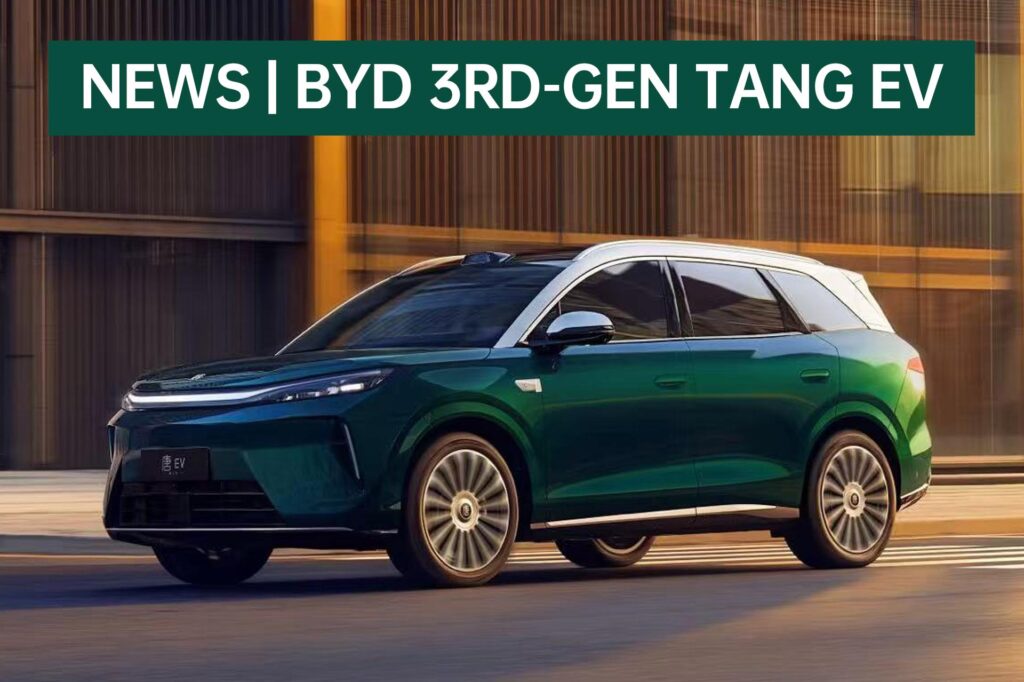

BYD has officially launched the third-generation Tang EV. Positioned as a “tech flagship,” the new model comes in three variants: the 730km RWD Premium, the 850km RWD Laser Deluxe, and the 850km RWD Laser Flagship.
Exterior and space: The new Tang offers eight exterior colors—three two-tone and five single-tone options. The front end features a 2.5-meter full-width “Flying Eave” light-blade headlight, while the rear sports Phoenix Plume China-style tail lamps and a Phoenix Wingspan welcome light carpet. With a body length over 5 meters and a wheelbase approaching 3 meters, the car comes exclusively in a five-seat layout, offering second-row legroom of 1,003mm and seat backrests that recline up to 130 degrees.
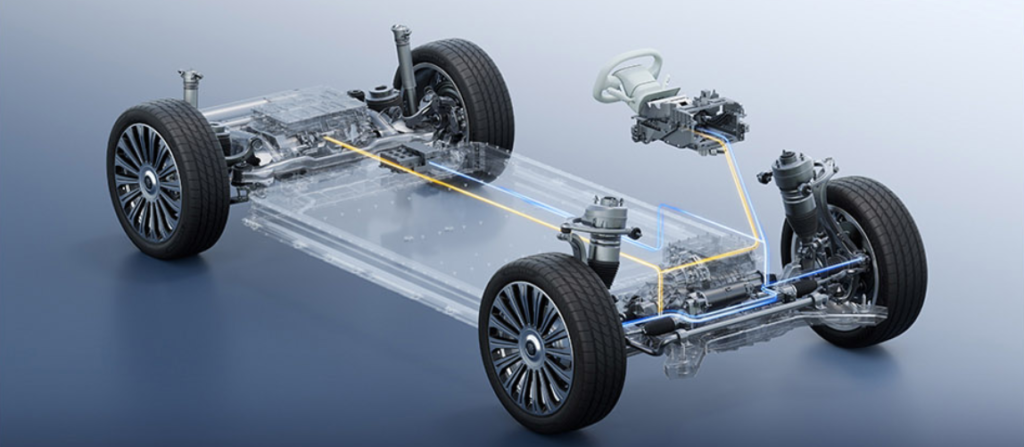
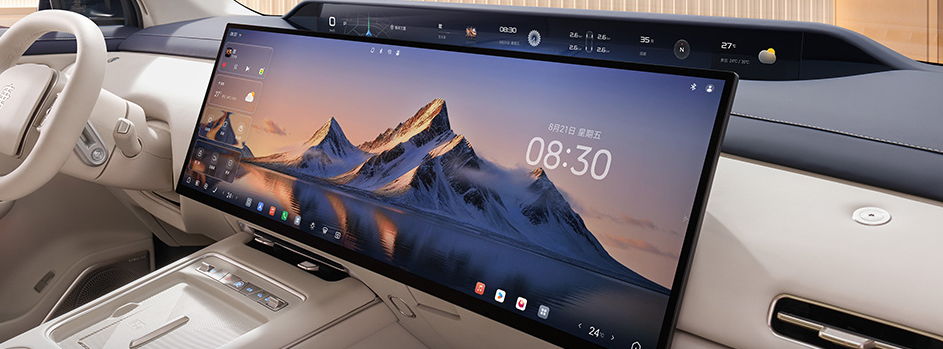
Cabin—focus of this update: Buyers can choose between two steering wheel designs, and all seats are wrapped in Nappa leather, with all four seats featuring ventilation, heating, and 10-point independent massage. The front passenger seat is a zero-gravity seat, and the second row supports over 12 configurations. Smart features center on a dual-screen setup: a 35.4-inch remote panoramic star-ring display for driving information and a 30-inch panoramic giant screen for interaction and entertainment. The voice assistant “Didixia” supports dialect recognition, vague commands, and cabin-wide voiceprint identification. Storage includes a 205L powered frunk with drainage, a 910L trunk (expanding to 2,098L with the second row folded), and a 6.8L heating/cooling refrigerator, plus more than 28 expansion ports and magnetic mounting points throughout the cabin.
Powertrain: The third-gen Tang is equipped with the second-generation Blade Battery and flash-charging technology, delivering a CLTC range of up to 850km (770km for AWD). The RWD version produces 300kW, while the AWD version delivers 515kW combined, sprinting from 0 to 100 km/h in 4.3 seconds. The chassis features front double-wishbone and rear five-link independent suspension, supports the Diyun-A air body control system and rear-wheel steering, and debuts the iTAC 2.0+ stuck-vehicle assist. Minimum turning radius is 5.6 meters, and the “Ling Yuan” onboard drone system is available as an option.
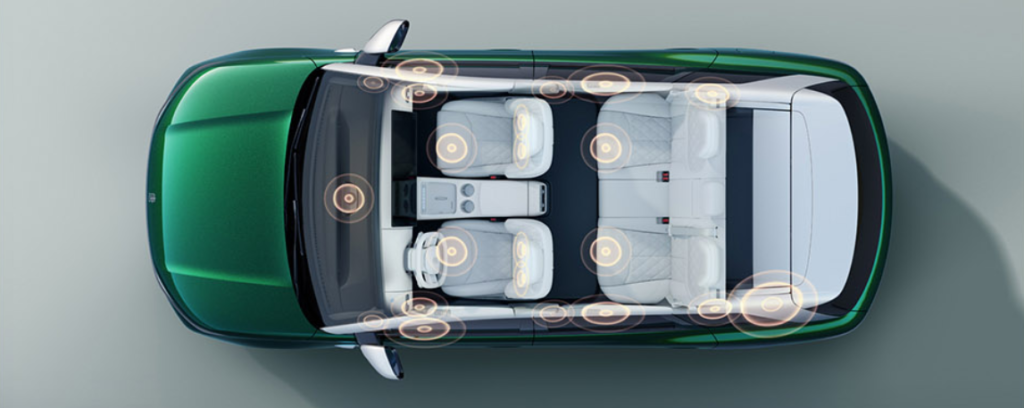
The biggest highlight is the debut of the new-gen steer-by-wire digital chassis, supporting both steer-by-wire and brake-by-wire. With no mechanical linkage between the steering wheel and wheels, signals travel directly via electric pathways, improving response speed by over 25%. The steering wheel can even be decoupled and used as a gaming controller without affecting the wheels.
Safety: The Tang features a 13-horizontal/9-vertical cage body with 11 airbags standard across all trims. It comes with the “God’s Eye B” laser ADAS, supporting city NOA and smart parking assist, along with the TBC high-speed tire-blowout stabilization system.
……………………………………………………Electrostatic Protection Knowledge……………………………………………………
Electrostatic discharge (ESD) and electrical surges are common transient high-voltage phenomena in automotive electrical systems. They are capable of damaging sensitive electronic components, triggering system failures, and even posing serious safety hazards. To address this, TVS (Transient Voltage Suppression) diodes and ESD (Electrostatic Discharge) protection components have been developed. As specially designed protection devices, their primary role is to safeguard automotive electronic equipment from such electrical shocks. TVS & ESD components, through their extremely fast response speed, clamp transient overvoltages to a safe level and divert the surge current to ground, thereby providing effective protection for downstream circuitry.
Within the automotive electronic architecture, TVS & ESD components are crucial for ensuring the stable operation of internal precision systems. As modern vehicles integrate a large number of control units and sensors that are highly sensitive to electrical interference, these components must be deployed at multiple critical nodes to build a comprehensive protection network. The protected systems cover all areas, from the powertrain to in-vehicle infotainment.
Specifically, TVS & ESD components in automobiles serve the following primary protective functions:
- Communication Bus Protection: Communication buses such as CAN, LIN, Automotive Ethernet, and RS232/485, which act as the vehicle’s “neural network,” are highly susceptible to interference from ESD and surges. TVS & ESD components ensure the integrity and stability of data transmission, preventing communication errors or interruptions.
- Core Safety System Protection: Core safety systems that are directly related to driving safety—such as the powertrain, Battery Management System (BMS), braking system, and radar—must rely on TVS & ESD components for protection to prevent critical functional failures caused by electrical interference.
- Interface and Peripheral Protection: External connection points like charging ports, keyless entry receivers, side-view cameras, and other cameras are primary pathways for ESD intrusion. TVS & ESD components can effectively block these paths, preventing damage to internal circuitry during connection events.
- Lighting and Display System Protection: In-vehicle display navigation and lighting systems also require protection to avoid damage such as burnt-out LEDs, display malfunctions, or permanent failure caused by transient high voltages.
In summary, TVS & ESD components play an indispensable role in ensuring the reliability of automotive electronic systems, reducing the total cost of ownership, and safeguarding the safety of drivers and passengers. As the level of automotive electronics and intelligence continues to increase, the proper deployment of these protection components has become a key element in enhancing overall vehicle quality and building user trust.
……………………………………………………………………Company Profile……………………………………………………………………
JY Electronics serves a global customer base across the automotive, industrial & power, computing, consumer, and mobile & wearables industries. Our extensive product portfolio includes Schottky diodes, TVS and ESD protection devices, MOSFETs, LDOs, power ICs, battery protection & segment driver ICs, industrial & automotive-grade sensors, high-side switches (HSD), current sensors, and automotive switch input chips. We are committed to continuous innovation, delivering high-quality products that empower our customers to develop energy-efficient and sustainable solutions.
For samples or a quotation, please contact us at market@jy-electronics.com.cn.