
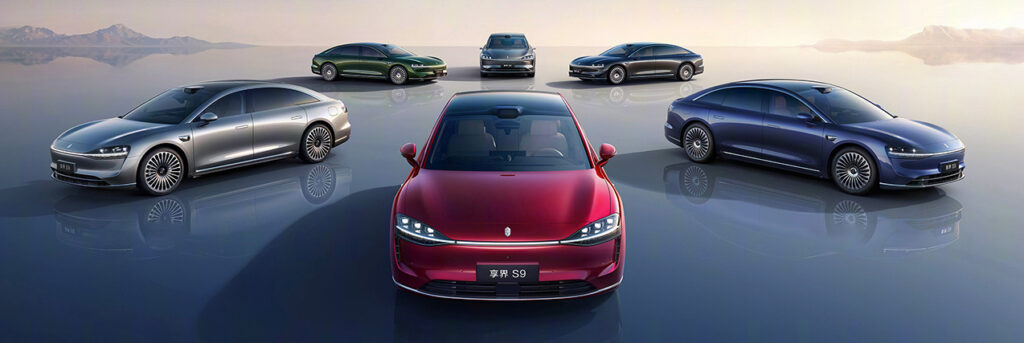
The new STELATO S9, as a panoramic intelligent flagship sedan under the HIMA brand, has been officially launched. With its outstanding luxury, intelligence, performance, and safety experiences, it redefines new standards for high-end sedans.
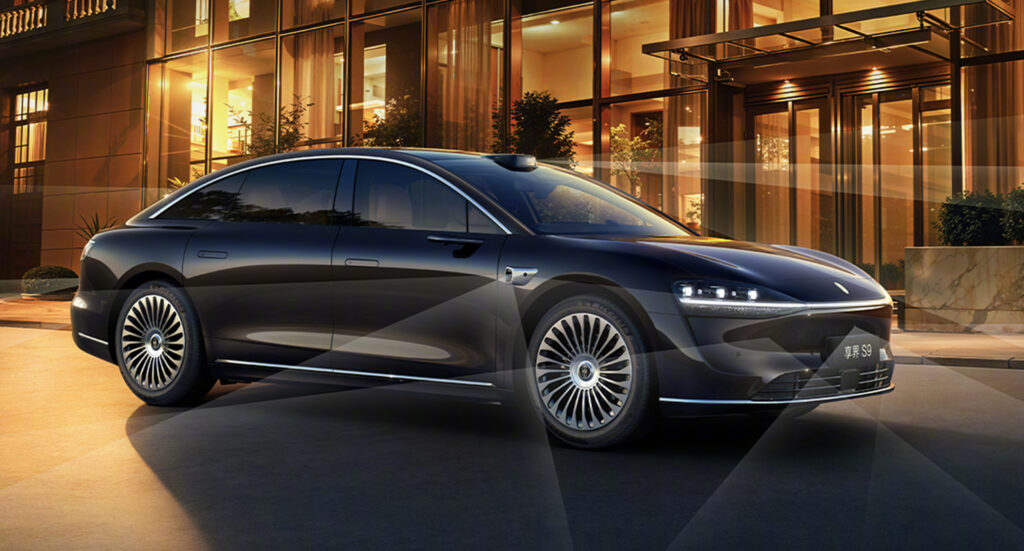
In terms of exterior design, the new STELATO S9 adopts the “Cosmic Star” emblem, paired with dazzling star-river headlights and a brand-new nebula-style full-width tail light, showcasing a unique sense of elegance and luxury. The vehicle features smooth body lines and a simple yet sophisticated silhouette, offering six paint colors and multiple wheel designs for users to choose from, catering to diverse aesthetic preferences.
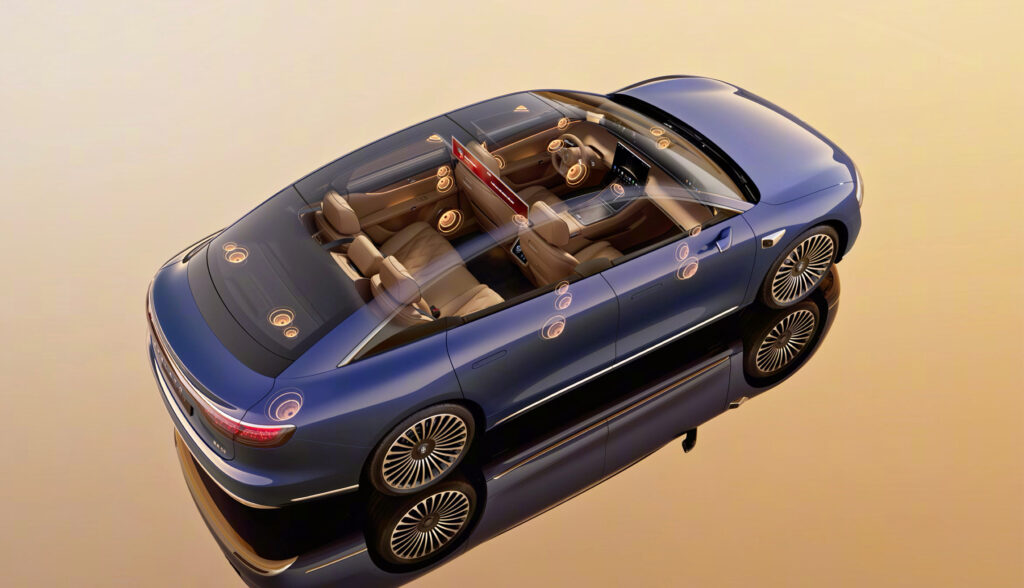
Inside, the new STELATO S9 lives up to its flagship status. The vehicle is equipped with Nappa leather seats that support massage, ventilation, and heating functions. The rear seats even feature a “One-Touch Zero-Gravity Mode,” providing an ultimate comfort experience. Additionally, the car is equipped with the HarmonyOS Intelligent Cockpit, boasting over ten screens, including a new-generation 16.1-inch intelligent central control display, a newly added 12.3-inch front passenger screen, and the Intelligent Projection Giant Screen System 2.0, enabling seamless multi-screen interaction and a comprehensive upgrade in smart interaction experiences.

Regarding power and range, the new STELATO S9 offers two energy options: pure electric and extended-range. The pure electric version is built on an 800V high-voltage platform, achieving a maximum CLTC combined range of up to 816km. The extended-range version is equipped with Huawei’s Snowy Owl Intelligent Extended-Range System, delivering a maximum CLTC combined range of up to 1,378km, effectively eliminating range anxiety for users.
In terms of safety performance, the new STELATO S9 also excels. It is equipped with Huawei’s ADS 4 (Advanced Driving Assistance System 4), featuring 36 high-precision sensors that enable all-dimensional collision avoidance 4.0, providing comprehensive safety protection for occupants. Furthermore, the vehicle adopts a six-horizontal-and-eight-vertical body structure and comes standard with nine airbags, further enhancing its safety performance.
Electrostatic discharge (ESD) and electrical surges are common transient high-voltage phenomena in automotive electrical systems. They are capable of damaging sensitive electronic components, triggering system failures, and even posing serious safety hazards. To address this, TVS (Transient Voltage Suppression) diodes and ESD (Electrostatic Discharge) protection components have been developed. As specially designed protection devices, their primary role is to safeguard automotive electronic equipment from such electrical shocks. TVS & ESD components, through their extremely fast response speed, clamp transient overvoltages to a safe level and divert the surge current to ground, thereby providing effective protection for downstream circuitry.
Within the automotive electronic architecture, TVS & ESD components are crucial for ensuring the stable operation of internal precision systems. As modern vehicles integrate a large number of control units and sensors that are highly sensitive to electrical interference, these components must be deployed at multiple critical nodes to build a comprehensive protection network. The protected systems cover all areas, from the powertrain to in-vehicle infotainment.
Specifically, TVS & ESD components in automobiles serve the following primary protective functions:
- Communication Bus Protection: Communication buses such as CAN, LIN, Automotive Ethernet, and RS232/485, which act as the vehicle’s “neural network,” are highly susceptible to interference from ESD and surges. TVS & ESD components ensure the integrity and stability of data transmission, preventing communication errors or interruptions.
- Core Safety System Protection: Core safety systems that are directly related to driving safety—such as the powertrain, Battery Management System (BMS), braking system, and radar—must rely on TVS & ESD components for protection to prevent critical functional failures caused by electrical interference.
- Interface and Peripheral Protection: External connection points like charging ports, keyless entry receivers, side-view cameras, and other cameras are primary pathways for ESD intrusion. TVS & ESD components can effectively block these paths, preventing damage to internal circuitry during connection events.
- Lighting and Display System Protection: In-vehicle display navigation and lighting systems also require protection to avoid damage such as burnt-out LEDs, display malfunctions, or permanent failure caused by transient high voltages.
In summary, TVS & ESD components play an indispensable role in ensuring the reliability of automotive electronic systems, reducing the total cost of ownership, and safeguarding the safety of drivers and passengers. As the level of automotive electronics and intelligence continues to increase, the proper deployment of these protection components has become a key element in enhancing overall vehicle quality and building user trust.
