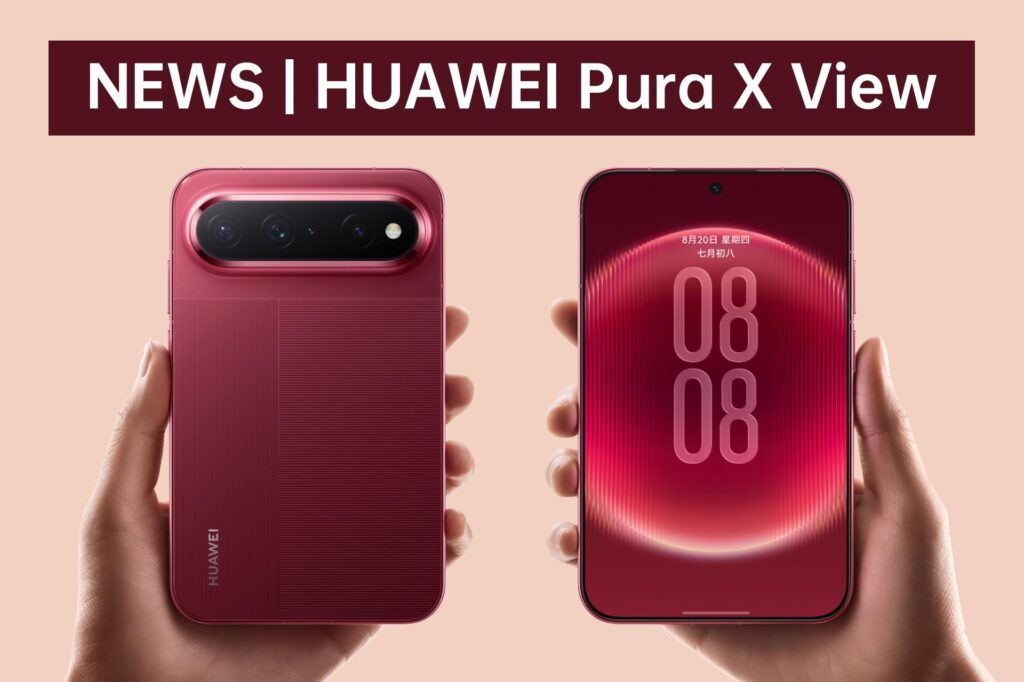
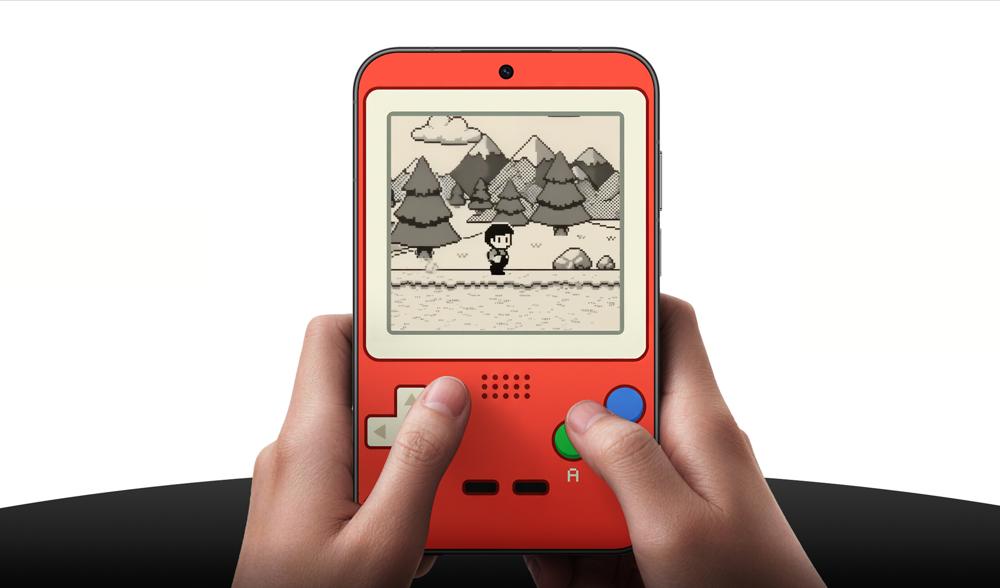
Huawei has launched the world’s first wide-aspect bar phone — the Pura X View. As a landmark product that extends Huawei’s wide-screen product matrix to the bar phone form factor, following its wide foldable and large wide foldable devices, it completely breaks the long-standing design inertia of traditional bar phones with tall and narrow aspect ratios, delivering a horizontal viewing experience close to that of wide foldable displays in a bar phone body that requires no folding mechanism.
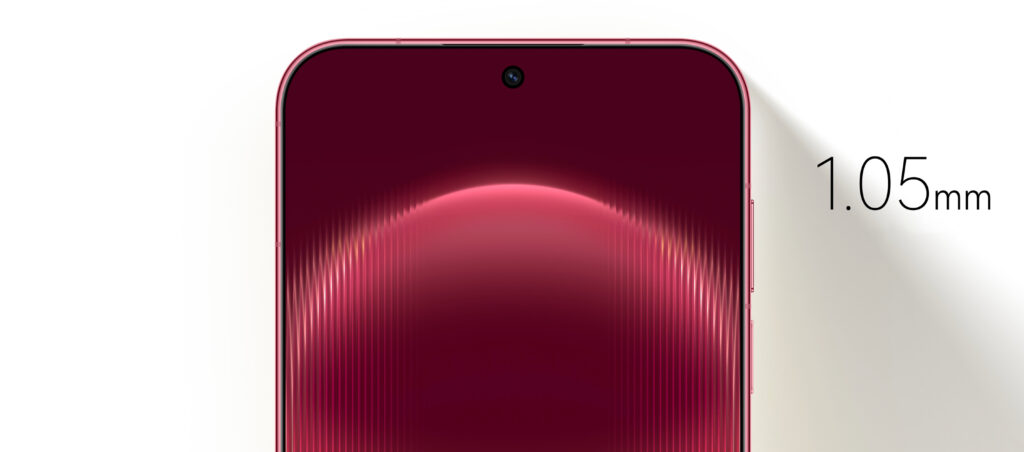
The device is equipped with the industry’s first 6.39-inch 16:9.5 wide OLED screen, paired with ultra-slim 1.05mm equal bezels on all four sides, ultimately achieving an industry-leading 96.1% screen-to-body ratio for bar phones. Its screen display area reaches 114.27 cm², offering a larger viewable area than conventional 6.9-inch traditional bar phones. When playing 16:9 TV series and live sports in landscape mode, the black bars on the screen are drastically reduced. When browsing news feeds and documents in portrait mode, the number of text elements displayed on a single screen is directly increased by 21%. The screen also supports a 6500nits partial peak brightness and 2160Hz full-brightness high-frequency PWM dimming, ensuring clear readability even under strong outdoor sunlight, while significantly reducing stroboscopic irritation at low brightness during nighttime use, balancing strong-light visibility and eye comfort for prolonged sessions.
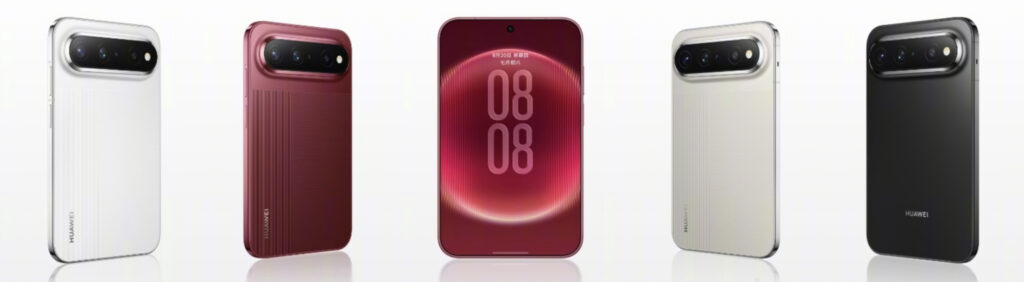
In terms of the balance between handfeel and battery life, the phone measures just 6.68mm thick (excluding the camera area) and weighs only 201g, placing it in the lightweight tier of bar phones. Despite this slim profile, it houses a large silicon-anode battery with a typical capacity of 7000mAh and a rated capacity of 6815mAh. Official lab tests confirm it supports 27 consecutive hours of online video streaming, 88 hours of standby, and 29 hours of text reading, completely eliminating the common pain point of excessive bulk in large-battery phones. The back panel adopts a 3D grating glass process, creating dynamic light and shadow effects through geometric stitched textures. The four official color options — Red, Gray, White and Black — feature exclusive fine-tuning of their grating textures for each shade, making the device highly recognizable.
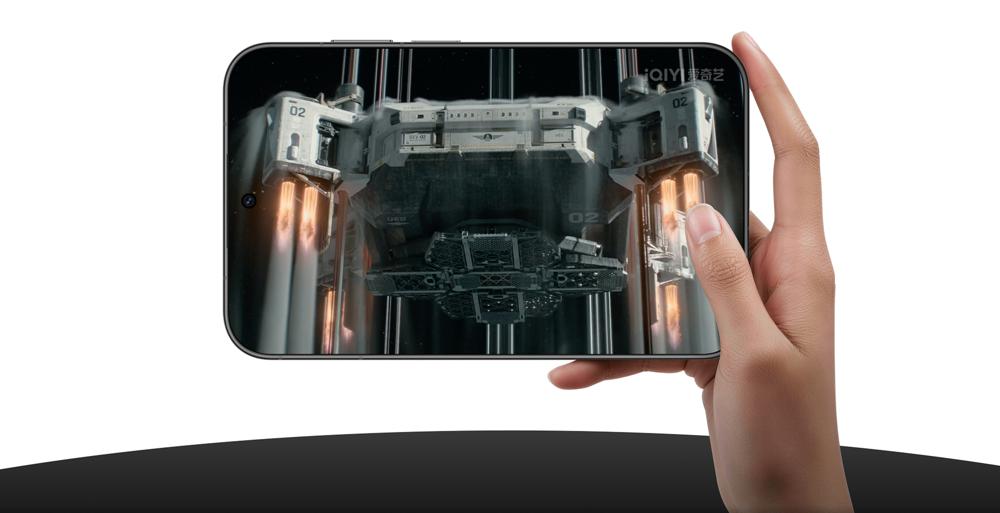
As the world’s first device to ship with HarmonyOS 7 pre-installed, Huawei has carried out in-depth full-scenario optimizations tailored for this wide screen: the Wide Reading mode supports horizontal layout optimization for e-books and PDF documents, the Wide Viewing mode automatically adapts to source aspect ratios to eliminate unnecessary black bars, the Wide Gaming mode allows users to customize and expand the side field of view, and the Wide Productivity mode enables side-by-side dual-app display. It also supports global input with the Huawei M-Pencil stylus. Under the hood, it is powered by the flagship Kirin 9030S chip, paired with a 50MP triple-camera full-focus imaging system with a periscope telephoto lens, and offers storage configurations starting from 12GB RAM, with 256GB / 512GB / 1TB ROM options available.
……………………………………………………Electrostatic Protection Knowledge……………………………………………………
ESD (Electrostatic Discharge) components are specialized electronic components designed to safeguard electronic devices from the damaging effects of electrostatic discharge. ESD is a sudden release of static electricity that can compromise the functionality or lifespan of sensitive electronic components. ESD components mitigate this risk by diverting, absorbing, or dissipating ESD events.
In mobile phones, ESD components are critical for protecting internal circuitry from ESD-induced damage. Due to the sensitivity of many components within a mobile phone, multiple ESD components are strategically placed to provide comprehensive protection. These components commonly include ESD diodes, TVS diodes, and other specialized protection devices.
Specifically, ESD components in mobile phones serve to protect various areas:
- Interface Protection: ESD protection is essential for interfaces such as charging ports, headphone jacks, and USB connectors to prevent damage from ESD events during connection.
- RF Circuit Protection: Radio Frequency (RF) circuits are highly susceptible to ESD and require dedicated ESD components to maintain signal integrity and prevent component failure.
- Processor and Memory Protection: Core components like processors and memory ICs require ESD protection to ensure reliable operation and data integrity.
- Touchscreen and Display Protection: Touchscreens and displays, integral to the user experience, are also vulnerable to ESD damage and are protected by dedicated ESD components.
In conclusion, ESD components are vital for protecting the internal electronics of mobile phones from ESD damage, ensuring their reliable operation, and extending their lifespan. Their strategic implementation is essential for maintaining device functionality and user satisfaction.
……………………………………………………………………Company Profile……………………………………………………………………
JY Electronics serves a global customer base across the automotive, industrial & power, computing, consumer, and mobile & wearables industries. Our extensive product portfolio includes Schottky diodes, TVS and ESD protection devices, MOSFETs, LDOs, power ICs, battery protection & segment driver ICs, industrial & automotive-grade sensors, high-side switches (HSD), current sensors, and automotive switch input chips. We are committed to continuous innovation, delivering high-quality products that empower our customers to develop energy-efficient and sustainable solutions.
For samples or a quotation, please contact us at market@jy-electronics.com.cn.