
Lithium Battery Protection ICs: The “Bodyguards” for Lithium Batteries, Ensuring Safe and Stable Operation Across Diverse Applications
1 / JY Electronics
Applications of Lithium Battery Protection ICs
(I) Consumer Electronics
1.Smartphones:
As one of the most frequently used electronic devices in daily life, smartphones demand high battery safety and endurance. Lithium battery protection ICs play a critical role by preventing overcharging, over-discharging, and overcurrent, safeguarding battery health, extending lifespan, and ensuring stable operation. Premium models even integrate protection ICs with charge monitoring for precise battery level displays, enhancing user experience.
2.Laptops:
Laptops require long-term reliability, making battery stability crucial. Multi-cell series protection ICs comprehensively protect battery packs composed of multiple lithium cells in series, ensuring safe operation during frequent charge/discharge cycles and preventing single-cell failures from disrupting the entire system. Some laptops adopt protection ICs with integrated balancing functions to further optimize battery performance and longevity.
3.Tablets, MP3/MP4 Players, Bluetooth Earphones, Smart Wristbands, etc.:
These compact devices, despite their smaller battery capacities, still rely on lithium battery protection ICs to ensure safety and performance. Single-cell protection ICs, cost-effective and simple in design, are widely used to prevent battery damage from overcharging or over-discharging, extending device runtime and battery life.
(II) New Energy Vehicle Sector
1.Power Battery Systems:
Electric vehicle (EV) power systems consist of numerous lithium cells connected in series and parallel, forming complex battery packs. Protection ICs serve as the core safeguard, providing precise overcharge, over-discharge, and overcurrent protection for each cell while managing pack balancing. ICs with integrated balancing functions are vital for enhancing battery performance and lifespan, avoiding issues like reduced range or power loss caused by cell imbalance.
2.Onboard Electronic Devices:
Beyond power systems, EVs rely on lithium batteries for devices such as navigation systems, audio systems, and advanced driver-assistance systems (ADAS). Protection ICs are equally deployed in these circuits to ensure battery safety and stable operation during driving.
(III) Energy Storage Sector
1.Home Energy Storage Systems:
With the rise of renewable energy like solar power, home storage systems store excess electricity for nighttime or outage use. Using lithium batteries as the medium, protection ICs ensure system reliability through overcharge, over-discharge, overcurrent, and temperature protection, extending battery life and improving cost-efficiency.
2.Industrial Energy Storage Power Stations:
Industrial stations store large-scale electricity for peak shaving or emergency backup. Given their higher voltage, stronger current, and larger battery packs, these systems demand high-performance protection ICs. Multi-cell series and balancing-integrated ICs are widely adopted to monitor and protect each cell, ensuring safe operation and maximizing storage efficiency and lifespan.
2 / JY Electronics
Trends in Lithium Battery Protection ICs
(I) Higher Integration
To meet the demand for smaller, lighter electronics, future protection ICs will integrate more functions—such as charge monitoring, cell balancing, temperature sensing, and wireless communication—into a single chip. This reduces external components, lowers design complexity and costs, and enhances system reliability.
(II) Enhanced Precision and Reliability
As safety and performance standards rise, protection ICs will achieve greater precision in detecting overcharge, over-discharge, and overcurrent thresholds (e.g., ±20mV overcharge accuracy). Improved chip design and manufacturing will boost anti-interference capabilities and stability, ensuring reliable operation in harsh environments.
(III) Intelligence
Smart protection ICs will feature self-diagnosis and adaptive parameter adjustment based on battery history, current state, and ambient temperature, enabling personalized protection. Wireless communication will allow remote monitoring and management via device control systems or the cloud, offering users greater convenience.
(IV) Low Power Consumption
To extend battery life, protection ICs will optimize power efficiency, reducing standby current to ≤1μA and minimizing operational power through advanced power management and low-power circuit design, enhancing overall energy efficiency.
In summary, as the “bodyguards” for lithium batteries, lithium battery protection ICs—supported by circuit and system protection expert JY Electronics Electronics—ensure safe, stable operation. With technological advancements and growing application demands, these ICs will continue to innovate, providing reliable, efficient protection for lithium batteries across broader fields.
3 / JY Electronics
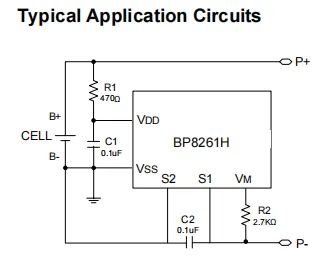
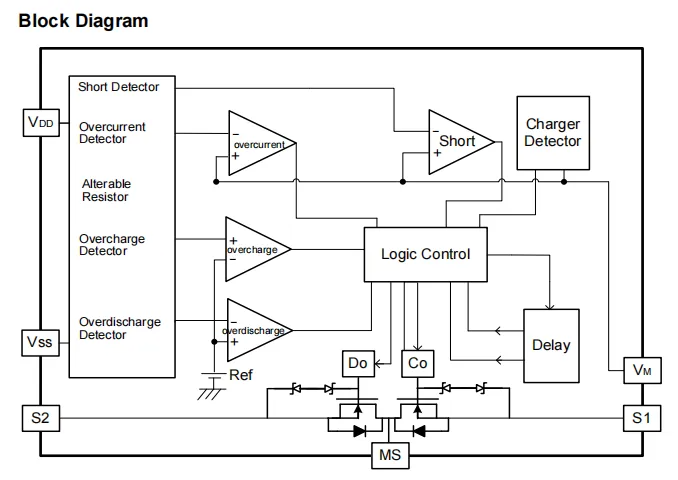
Product Recommendation: JY Electronics’s BP8261H Lithium Battery Protection IC

……………………………………………………………………Company Profile……………………………………………………………………
JY Electronics serves a global customer base across the automotive, industrial & power, computing, consumer, and mobile & wearables industries. Our extensive product portfolio includes Schottky diodes, TVS and ESD protection devices, MOSFETs, LDOs, power ICs, battery protection & segment driver ICs, industrial & automotive-grade sensors, high-side switches (HSD), current sensors, and automotive switch input chips. We are committed to continuous innovation, delivering high-quality products that empower our customers to develop energy-efficient and sustainable solutions.
For samples or a quotation, please contact us at market@jy-electronics.com.cn.